
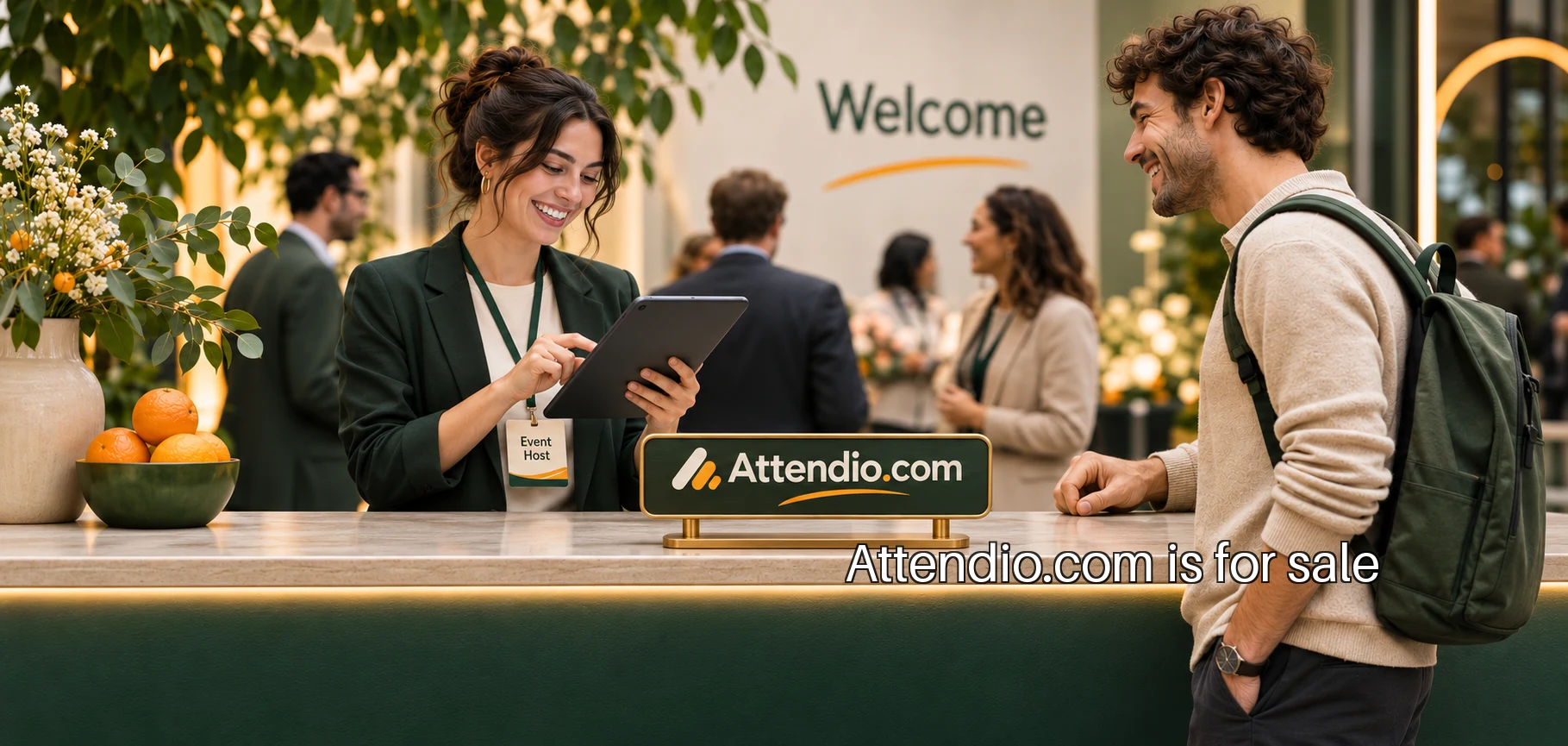
A focused product at the entrance
Your event platform, from the first invitation to the welcome at the door. Attendio could begin with one job inside that wider promise: helping recurring professional events welcome registered guests. Its starting customer would be the organizer who knows the event program but needs the arrival process to work reliably with a small team.
The first version could serve a series of breakfast events or a conference with a single entrance. That boundary matters. A founder can learn a great deal from one check-in point, a known registration list and a team that will use the product again next month. A complicated festival with multiple venues would add decisions before the core workflow is understood. A recurring event gives the founder repeated chances to observe the same practical job.
Follow the organizer through a real morning
Picture an organizer preparing a gathering for eighty guests. The guest list has late additions, two people who registered under company email addresses and a speaker whose assistant made the booking. The host at the door needs to find each person quickly and correct an ordinary mistake without calling the organizer away from the room. Those small cases are the product brief.
Before building a polished dashboard, write the sequence on a simple working document. Who imports the list? Who can change a name? What information does the host need to see? Which details should remain hidden? How does an unregistered guest get help? A founder can test that sequence with a sample list and a host at a table. The test should include awkward names, duplicate bookings and an interruption halfway through a search.
The display could have a clear search field, a short result list and an unmistakable arrival status. It should distinguish a successful check-in from a search result that has merely been opened. A mistaken tap needs a way back. If several people are checking guests in at once, the team needs a shared understanding of what the status means. These are decisions about the host's working morning, not a contest to fit the most controls onto a screen.
Plan the exceptions before opening the doors
A useful pilot includes a fallback for loss of connectivity. The organizer should know which information remains available, what can be recorded during an outage and how those records will be reconciled afterward. That behavior needs to be explained and rehearsed. A founder can begin with a modest fallback that is dependable, then add sophistication after observing the actual failure cases.
Accessibility belongs in the same early plan. The W3C event accessibility checklist encourages organizers to consider accessible venues and routes and provide useful access information. A check-in product could give organizers a place to publish the entrance instructions and a clear contact for assistance. The software should support the arrival plan instead of treating every guest as someone who can use the same door in the same way.
Keep sensitive requests separate from the general host view. A person asking about access or dietary arrangements should not have that information displayed to every volunteer. Decide what each role needs for the task and make the boundaries understandable. For a pilot, a direct organizer contact may be a better answer than a large set of fields with unclear access rules. Collect only what the team is ready to handle responsibly.
Reach customers through their recurring work
The first conversations could be with independent conference organizers, professional associations and venue teams that host repeat gatherings. Ask them to walk through their last arrival period. Where did the queue form? Which question came up most often? Who had to leave another job to resolve a problem? A founder needs examples of actual work before deciding what should be automated.
An initial offer could be one supported event with a defined setup process. Explain exactly what the organizer supplies, what the product does and who handles exceptions. Pricing would need to reflect the chosen service model and its costs; the concept does not require a public promise before those are understood. After the pilot, compare the organizer's experience with the original plan and record which steps still required outside help.
Use a small set of operational measures
Count failed searches, corrections and cases escalated to the organizer. Observe how a new host learns the interface and whether the team can explain the fallback. These observations are more useful at this stage than a broad claim about event engagement. Ask the organizer which part of the arrival process they would willingly use again and which part they would change before the next event.
Attendio gives this focused service an identity that can extend as the work expands. The founder can put the same name on registration messages, the host interface and a later session-booking feature. Start with the entrance, make the handoff clear and build the next tool around something the organizer has actually asked to do. The result could be a platform whose name belongs to the whole event experience, with a useful first product at its center.